
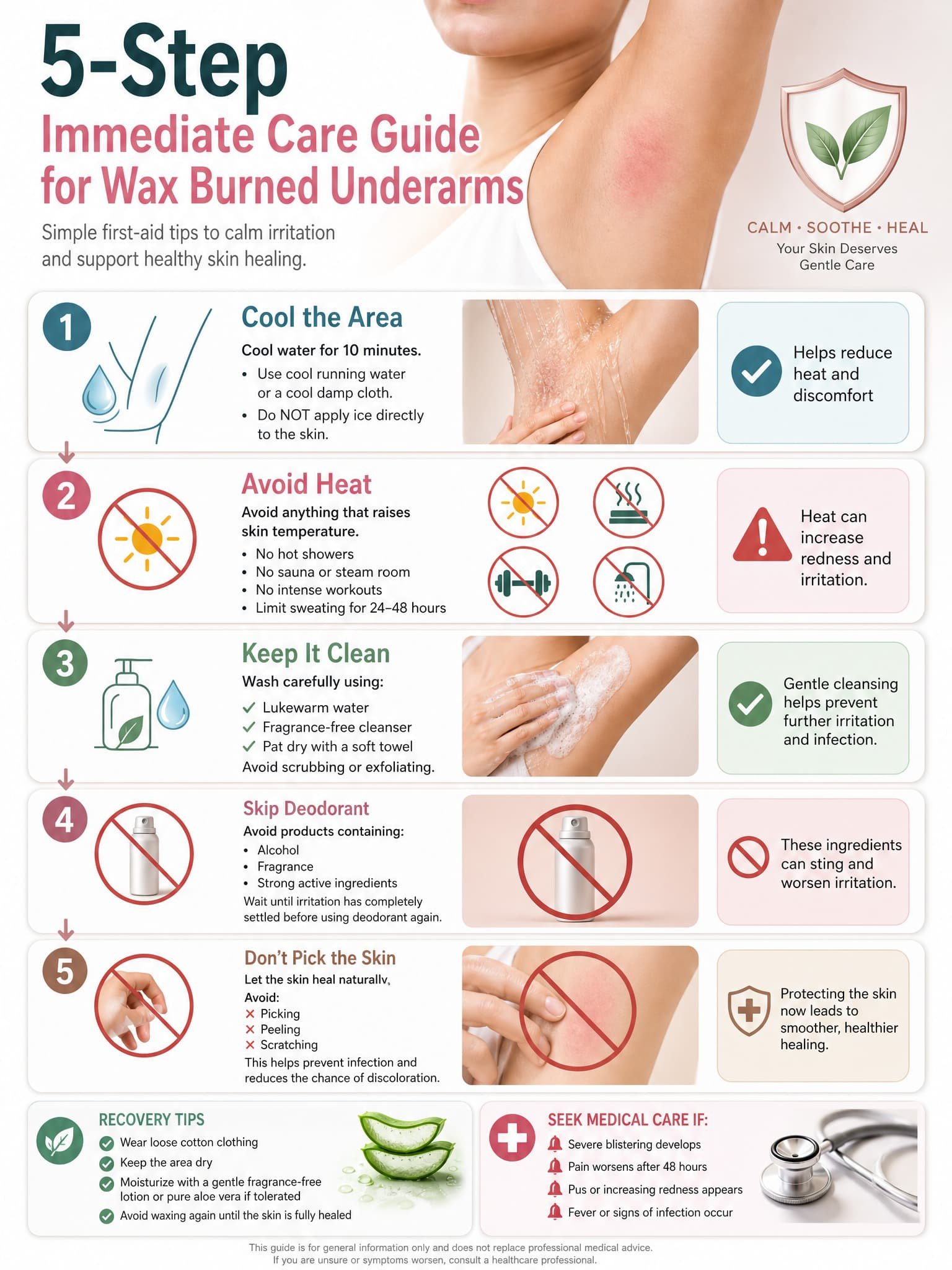
To treat wax burn marks under your arms, cool the area under running cool water for 10–20 minutes as soon as possible. Then, apply a thin layer of petroleum jelly or 100% pure aloe vera to keep it moisturized. Keep the area clean, avoid deodorants, perfumes, and scented lotions until the burn has fully healed.
Burn marks on the skin are mainly caused by overproduction of melanin in the skin. Dermatologists call this post-inflammatory hyperpigmentation (PIH). PIH can be concerning, especially in sensitive areas like the underarms, as the skin is thinner and more prone to irritation. Some major factors like repeated waxing on the same area, high wax temperature, or improper aftercare make the pigmentation darker.
Read on to get expert guidance on how to remove wax burn marks from underarms, with highlighted professional suggestions on prevention.
What Causes Wax Burn Marks on Underarms?
Wax burn marks under your arms usually happen when the wax is too hot or stays on the skin too long. Sensitive skin, repeated waxing over the same area, and poor aftercare can also increase the risk of burns and dark marks.
Here are the exact reasons you must know about:
Temperature Too High
One of the most common causes of burns during waxing is waxing with increased temperature. When wax is heated beyond safe temperatures, likely at 60–70°C (140–158°F), it can cause a thermal burn on contact.
Even a minor exposure to extreme temperatures can damage the skin’s surface and increase the chances of skin damage and burn marks later.
Darker Skin Tones React More Intensely
When your skin becomes injured from a burn, the body produces more melanin as a part of its healing process. Even people with darker skin tones are typically more prone to PIH, which is caused by inflammation.
For that reason, a wax burn that leaves only a light mark on bright skin may cause a much darker patch of discoloration on darker skin. This is called post-inflammatory hyperpigmentation.
Pulling Strip in Wrong Direction
Often, we head to an unreliable waxing service where we can expect just poor technique applied there for waxing.
For instance, if they pull the strip quickly and close to the skin, usually against the direction of hair growth, it can just tug and stretch the skin excessively, causing burn. And when the skin heals, the resulting inflammation causes hyperpigmentation.
Using the Wrong Type of Wax
Soft wax not just sticks to the hair but also to the top layer of dead skin cells. When you are pulling the strip, it can sometimes remove part of this surface layer, a condition known as skin lifting.
And as the underarm skin is very thin and sensitive, there is a possibility of irritation and burn if handled unprofessionally. As the skin heals, it may produce extra melanin and can leave behind a dark mark.
What to Do Immediately After a Wax Burn
When a wax burn happens, go through the listed quick and correct actions to significantly reduce damage
Cool the Area Safely
Right immediately, you just need to rush out and run cool water over the burn for 10 minutes. Never apply ice directly to the skin. Never apply ice directly to the skin as it may lead to frostbite within minutes, make your burn issue even worse, and cause skin discoloration. Instead, wrap ice in a cloth first, then press gently. Cool water stops the heat from spreading deeper.
Avoid Further Heat Exposure
After a wax burn, the affected area remains sensitive and inflamed for several hours. So it is obvious that exposing the area to more heat can lead to more irritation.
Inflammation is one of the main triggers of post-inflammatory hyperpigmentation. As a precaution for the first 24–48 hours, avoid hot showers, saunas, steam rooms, and intense workouts that cause excessive sweating. Wear loose and breathable clothing to minimize heat buildup.
Keep the Skin Clean
A wax burn leaves the skin irritated and more vulnerable to bacteria. So as a precaution, you have to keep the area clean to prevent infection.
For this, just gently wash the affected skin twice a day using fragrance-free soap and lukewarm water. Just don’t rub or scrub the area.
Skip Deodorants and Fragranced Products Temporarily
Deodorants contain alcohol, aluminum, and fragrance. It may cause stinging, redness, or further inflammation. In worse cases, these products can even clog irritated hair follicles and increase the risk of follicle irritation or infection.
So just give your skin time to heal and avoid applying deodorants and other fragranced products to the affected area for at least 48 hours.
Do Not Pick or Peel Damaged Skin
As the skin heals after a wax burn, it may feel dry, tight, or slightly flaky. So it might be satisfying to peel off the skin. But doing so can make the damage worse, as the top layer of skin acts as a natural protective barrier.
So when you are peeling it off, you expose sensitive, healing skin underneath, which slows down the recovery and increases the risk of dark spots.
How to Remove Wax Burn Marks From Underarms?
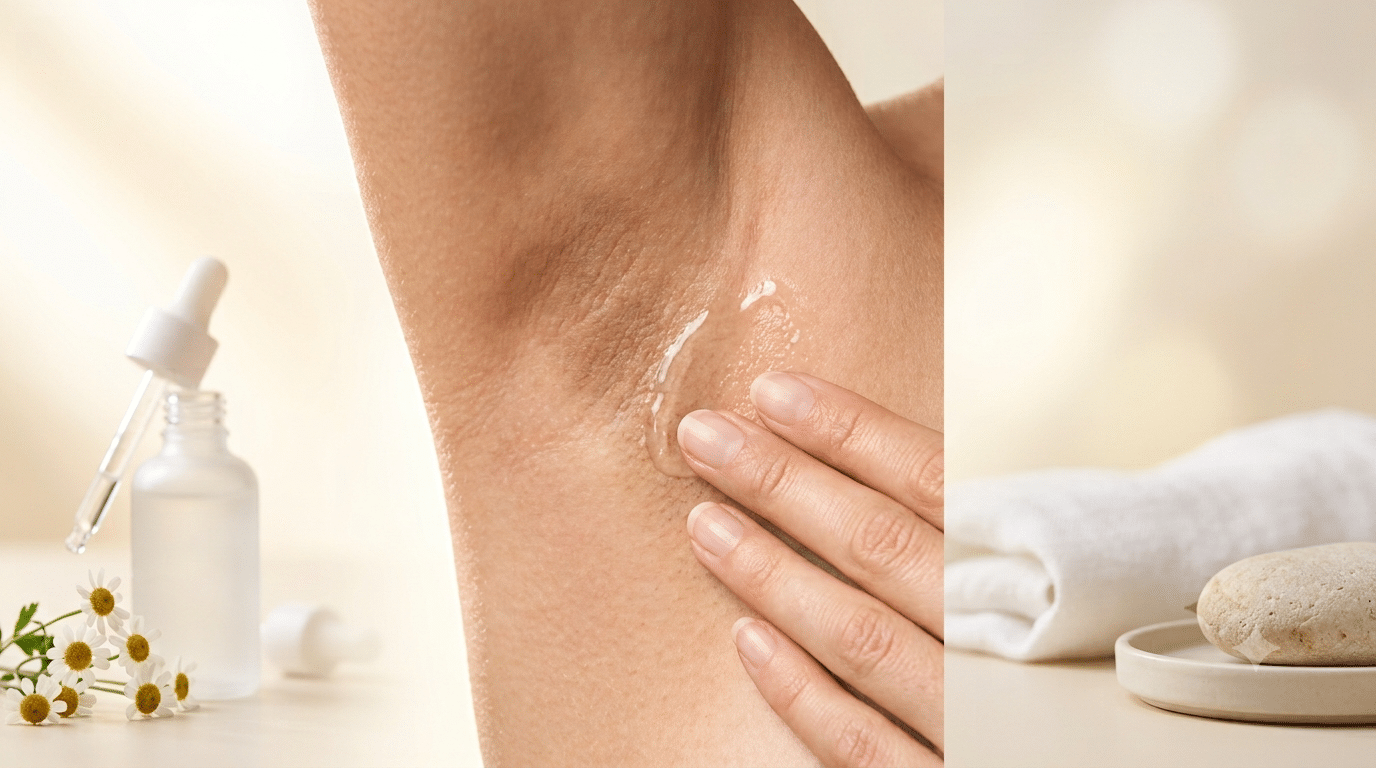
You can easily remove the burn marks from underarms by gentle exfoliation using AHA and BHA products. You can also apply natural ingredients in this instance to soothe the skin and reduce inflammation. A consistent skincare routine can help gradually fade the pigmentation over time.
Method 1: Gentle Chemical Exfoliation
1. Lactic acid (AHA)
Consistent use of lactic acid helps improve skin texture. Moreover, you can take advantage of post-inflammatory hyperpigmentation lightening gradually. It has a larger molecular size compared to glycolic acid, so it gets into the skin more slowly and gently.
So it is perfect to apply to sensitive areas like the underarms. Apply it to clean, dry skin in a thin layer 2–3 times per week, preferably at night.
2. Glycolic acid (AHA)
Glycolic acid is a stronger alpha hydroxy acid you can use to speed up the skin cell healing process and fade post-inflammatory hyperpigmentation. A 12-week clinical study using 10% glycolic acid showed noticeable improvement in PIH starting from week 4, with continued progress through week 12.
But it can penetrate deeper compared to lactic acid, so it is more likely to cause irritation. So you should use a 5%–10% glycolic acid product to start.
3. Salicylic acid (BHA)
Salicylic acid is a beta-hydroxy acid that goes deeper into the pores compared to AHAs. So it works effectively for underarm PIH. A 2026 PubMed review confirmed that chemical peels, including salicylic acid, are recommended treatment options for PIH.
It helps unclog pores and clear active acne. So you can easily use it to remove epidermal pigment
Method 2: Natural Remedies
1. Aloe vera gel
Aloe vera is one of the most effective natural skin-soothing agents. It contains aloin and polysaccharides, which help in reducing inflammation and gently influence melanin activity.
The gel also reduces redness and irritation after waxing burns. Just apply pure aloe vera gel 2–3 times daily on clean skin. And let it absorb naturally.
2. Cucumber gel
Cucumber is rich in vitamin C, caffeic acid, and flavonoids. These active properties provide antioxidant and anti-inflammatory effects. Moreover, it has a high water content that is excellent for hydrating and cooling irritated underarm skin. Apply cucumber juice or gel for 10–15 minutes once or twice daily. When it feels sticky, just rinse it.
3. Yogurt + honey mask
Yogurt naturally contains lactic acid that gently exfoliates dead skin cells. Moreover, honey is a natural humectant and antimicrobial agent. It keeps the skin hydrated and protected from infection during healing.
- Mix 1 tbsp yogurt + 1 tsp honey.
- Apply for 10–15 minutes, 2–3 times weekly
- Then, rinse with lukewarm water.
4. Turmeric extract
Curcumin in turmeric has anti-inflammatory and skin-brightening properties. This is also great in reducing excess pigmentation over time. However, to use it, just mix a small pinch of turmeric with yogurt or honey. Apply for 10 minutes, then rinse thoroughly. Use 2–3 times weekly.
5. Rosehip oil
Rosehip oil is another natural ingredient that you can use to improve the burn marks. It has linoleic acid, vitamin A, and antioxidants that help in skin regeneration.
Moreover, you can expect improved skin texture and reduced visible discoloration. Just apply 2–3 drops at night and gently massage into the skin.
6. Aloe vera + Vitamin E combo
Vitamin E is a powerful fat-soluble antioxidant. This especially helps in protecting skin cells from oxidative stress caused by inflammation.
Moreover, when you are combining it with aloe vera’s healing properties, it accelerates pigmentation recovery. You can just mix aloe vera gel with 1–2 drops of vitamin E oil. Ensure you apply it once at night.
7. Green tea extract
It is even clinically proven that green tea extract helps fade and improve the appearance of burn marks. It has active ingredients like epigallocatechin gallate that are scientifically proven to target discoloration. Brew green tea, cool it completely, and apply using a cotton pad once daily. Let it air dry on the skin.
Method 3: Brightening Serums & Actives
1. Vitamin C
Vitamin C is a powerful antioxidant that helps reduce oxidative stress in the skin and helps in achieving a more even skin tone. It is likely a tyrosinase inhibitor that interrupts the production of melanin in the skin. So you can use a 10%–20% vitamin C serum once daily in the morning on clean, dry skin.
2. Niacinamide
Niacinamide or Vitamin B3 is one of the most effective ingredients for hyperpigmentation. It also helps reduce the transfer of melanin to skin cells, which gradually fades dark patches. It is even effective in reducing inflammation. Just use a 2%–5% niacinamide serum once or twice daily.
3. Kojic acid
It is mainly derived from fungi and is widely used in dermatology for pigmentation. This also works by indirectly reducing melanin formation. Use a 0.5%–2% kojic acid product at night, 2–3 times per week. But ensure you moisturize afterward.
4. Arbutin
It is the most popular skin-brightening agent that works by slowly releasing hydroquinone-like activity in a controlled way. This reduces melanin production without any irritation. Apply a mild alpha arbutin serum once daily.
5. Anti-dark spot cream (Axiclar)
Beyond all the above, you can use any commercial anti-dark spot creams to lighten the dark spots on your burn area in the underarm. They are especially made to target pigmentation through multiple pathways.
This is likely reducing melanin production and calming the inflammation. Just based on your doctor’s prescription, apply an anti-dark spot cream in a thin layer once or twice daily on clean, dry underarm skin.
Is it a Rash, a Burn, or a Dark Mark? (Quick Comparison)
| Rash | Burn | Mark (PIH) | |
| Appearance | Small bumps, redness | Red/raw skin, possible blistering | Flat brown or dark patch |
| Onset | Within hours of waxing | Immediately, at the time of waxing | Develops from days to weeks after skin heals |
| Sensation | Mild itching or stinging | Painful, burning, tender to touch | Usually painless |
| Skin texture | Slightly raised, may have tiny pimples | Peeling, blistering, or a raw surface | Smooth, just discolored |
| Typical cause | Hair follicle irritation, ingrown hairs, sensitivity to wax | Wax too hot or left on too long | Leftover pigment after a burn or inflammation heals |
| How long does it last | A few hours to 2–3 days | A few days to 1–2 weeks (active wound) | Weeks to months (this is what the rest of this guide treats) |
What If the Skin Is Broken or Blistered?
- Don’t pop or pick at any blisters.
- Gently clean the area with cool water first.
- Pat dry with a clean, soft cloth. Make sure not to rub.
- Apply a thin layer of antibiotic ointment (like bacitracin).
- Cover with a light, non-stick bandage.
- Change the bandage daily, or sooner if it gets wet or dirty.
- Take OTC ibuprofen if needed for pain or swelling.
- Watch for signs of infection: increased redness, pus, warmth, or odor.
- See a doctor if blistering is severe or covers a large area.
Common Mistakes That Make Wax Burn Marks Worse
- It is a common mistake to use active ingredients like retinoids, acids, or vitamin C on burned skin too early, right after the accident. It can burn and irritate the already damaged area more.
- Most people use heavy oils or thick ointments immediately. It can worsen inflammation and delay recovery.
- You must avoid exposing the burn to direct sunlight. UV rays cause the skin to produce more melanin and darken.
- Some people even try to pick at the scab or peel off the skin. It is just removing the skin’s natural protective crust and interrupts the healing cycle.
- It is a major mistake to use fragranced or alcohol-based products. It can cause redness, dryness, or allergic reactions that just worsen the inflammation.
- Until your burns are properly healed, you must avoid re-waxing or shaving the irritated skin. It prevents proper healing and increases the risk of post-inflammatory hyperpigmentation.
- Once the area has healed, sun exposure can darken the mark further, so cover it with clothing or use a mineral SPF whenever it’s exposed.
What are the Professional Treatments for Stubborn Cases
Here we are suggesting treatment options most consider to remove the stubborn burn marks from skin:
1. Chemical Peels
Chemical peels should be used for professional treatment for stubborn burn mark cases. For instance, dermatologists apply a carefully measured acid solution to the skin. This creates a controlled exfoliation injury that helps regenerate the skin and ensures a smoother texture. However, there are some common peels that are mostly used:
| Peel Type | How It Works | Best For | Session Plan |
| Glycolic Acid (AHA) | Exfoliates the skin by breaking down dead skin cells. This speeds up cell turnover and fades surface pigmentation | Surface-level PIH (brown marks from wax burns) | 6–10 sessions, spaced 2–4 weeks apart |
| Salicylic Acid (BHA) | Helps insert oil-rich follicles and reduces inflammation. It even exfoliates inside pores to clear pigment. | PIH with ingrown hairs, bumps, or follicle-related inflammation | 3–5 sessions, spaced 2–4 weeks apart |
| TCA (Trichloroacetic Acid) | Creates a controlled skin injury that removes damaged pigmented layers. | Stubborn or deeper pigmentation | 2–6 sessions, strictly dermatologist-guided, spaced 3–4 weeks apart |
2. Professional Microneedling
Professional microneedling is a dermatology procedure where a dermatologist uses a medical device with very fine, sterile needles. The process helps in activating the healing process.
And as the skin repairs itself, it produces new collagen and speeds up cell turnover. This helps reduce pigmentation in the skin. You can ensure healthier, more evenly toned skin.
In many cases, dermatologists apply brightening serums such as Vitamin C or tranexamic acid during the procedure. These active ingredients go deeper into the skin and effectively reduce hyperpigmentation.
Tips:
Professional handling also matters when you are choosing hair removal methods for your underarms. For instance, sugaring or waxing is often preferred for sensitive skin as it removes hair with minimal adhesion to living skin cells. But only when done with professional hair removal services can you ensure a lower risk of inflammation-driven pigmentation.
How Long Do Wax Burn Marks Take to Fade?
You can expect most burn marks to usually fade within 2–3 months with consistent treatment. But without treatment, they can last 6–12 months or longer.
For most people, mild spots can fade within 1–3 weeks. But for deeper pigmentation, it will last for months, but still varies based on your skin. In some cases, marks can be permanent. That means without treatment, hyperpigmentation can persist for months to over a year.
| Situation | Timeline |
| Mild surface mark, with treatment | 1–3 weeks |
| Moderate mark, consistent treatment | 6–12 weeks |
| No treatment, lighter skin | 6–12 months |
| No treatment, darker skin | 1–2+ years |
| Deep dermal burn, untreated | Potentially permanent |
When to Go to a Pro to Remove Burn Marks From Underarms
Most burn marks usually fade with proper care. But in most cases, you must seek proper professional treatment. Here are some obvious signs you must keep concentrated on:
- You are not seeing any improvement in burn marks even after 2–3 months of trying.
- The pigmentation is getting darker instead of lighter. Most often, this is an indication of ongoing inflammation.
- Over time, you may experience pain, blistering, pus, or spreading redness that continues beyond 48 hours.
- You are finding the area becoming raised, thickened, or itchy.
- The pigmentation appears severe or persistent.
To Conclude
No matter the cause, wax burn marks can be frustrating. But the good news is they are treatable with the right care and consistency. With regular treatment and proper prevention practices, you can see a big difference on your own.
As a core prevention strategy, you should opt for skin-friendly hair removal options. For instance, consider professional sugaring services at Sugar Wax Haven.
Frequently Asked Questions
What should I avoid after a wax burn?
After a wax burn, you must avoid heat, scrubbing, fragranced products, and deodorants immediately. It can increase irritation and inflammation, which can make the pigmentation darker.
When should I start using skincare after a wax burn?
Start gentle skincare only after the skin calms down, usually 24–48 hours later. Avoid strong activities initially and focus on soothing and hydrating products first.
What is the fastest way to fade wax burn marks?
The fastest way is consistent care using gentle exfoliation (AHA/BHA), brightening ingredients, and sun protection. Professional treatments may help if marks are stubborn or long-lasting.
Does sun exposure make wax burn marks darker?
Yes, UV exposure boosts melanin production, which can darken a healing mark. Once the burn has closed, cover the area or use a mineral SPF to stop the pigmentation from deepening.
How do I know if it’s a rash, a burn, or a dark mark?
A rash appears as itchy bumps within hours; a burn causes redness, pain, or blistering immediately; a dark mark (PIH) is a painless brown patch that develops days to weeks later.
What should I do if waxing leaves an open or blistered burn?
Don’t pop the blister. Clean it with cool water, pat dry, apply a thin layer of antibiotic ointment, and cover with a non-stick bandage. See a doctor if it’s severe.