

For the leg waxing, the ideal temperature ranges between 125 to 140°F or 50°C to 60°C. At this range, the wax becomes thin and honey-like in consistency. It works best as it slowly drips off the spatula without running too fast, allowing you to spread it evenly and remove hair more effectively.
While waxing, many focus on the technique, but the perfect temperature brings the right results. A few degrees too high burns skin in seconds. Even a few degrees too low snaps hair at the surface instead of pulling it from the root. So, like technique, the temperature is measurable and can be adjusted professionally.
This cockpit guide is designed to give a complete overview of what temperature should be used for leg wax from a professional’s end.
Key Takeaways:
- The right wax temperature ensures smooth removal and protects your skin.
- Wax should have a slow, honey-like consistency to spread evenly.
- Overheated wax can burn your skin within seconds.
- Wax that is too cool leads to hair breakage and patchy results.
What are the Ideal Wax Temperatures for Legs?
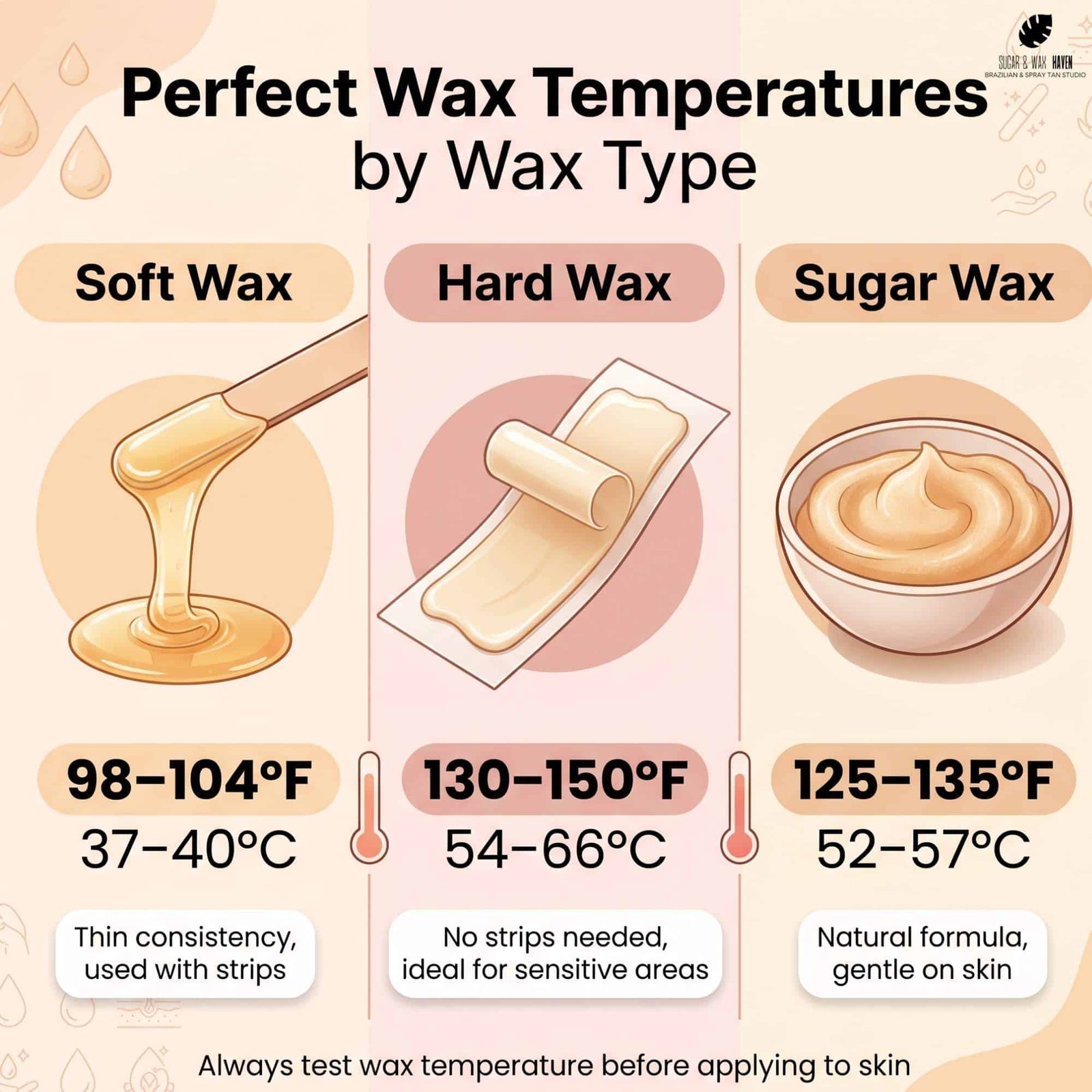
- Three horizontal sections or vertical columns, each representing a wax type: Soft Wax, Hard Wax, Sugar Wax.
- Icons/Illustrations:
- Soft wax → thin, honey-like wax dripping from spatula
- Hard wax → thick, smooth wax strip
- Sugar wax → soft, paste-like texture in a bowl
- Temperature Range: Display the temperature in both °F and °C next to each wax type.
- Soft Wax → 98–104°F / 37–40°C
- Hard Wax → 130–150°F / 54–66°C
- Sugar Wax → 125–135°F / 52–57°C
- Alt Text: “Perfect Wax Temperatures by Wax Type
The ideal temperature for your leg waxing typically depends on the type of wax you are choosing. For instance, soft wax must be within 98°F–104°F or 37°C–40°C. On the other hand, hard wax should be around 130°F–150°F or 54°C–66°C, and sugar waxing works best at 125-135°F or 52-57°C.
| Wax Type | Temperature Range | Consistency |
| Soft Wax (Strip Wax) | 98°F–104°F (37°C–40°C) Up to 110–120°F (with testing) | Runny, ribbon-like, spreads thinly |
| Hard Wax | 130°F–150°F (54°C–66°C) | Thick, pourable (like warm honey) |
| Sugar Wax temp Celsius and Farenheight | 125–135°F (52–57°C) | Soft, taffy-like paste |
| General Mix (Leg Waxing) | Moderate heat (not too thick/runny) | Balanced texture for a strong grip |
At this temperature range, you will find the mixture not too thick and not too runny, which helps grip the leg hair strongly. You can take advantage of the best benefits of waxing.
i) Soft Wax (Strip Wax)
Soft wax is best applied at 98°F–104°F (37°C–40°C). This is where you will get a runny, ribbon-like consistency and spread thinly and evenly over the skin. This consistency allows the wax to bond directly to both hair and skin and effectively remove even fine or short hairs as short as 2mm.
Many professionals even suggest you can reach the temperature up to 110–120°F, which helps grip hair more efficiently, still safe if tested on skin.
ii) Hard Wax
Hard wax is best heated at 130°F–150°F or 54°C–66°C, in which you will get a thick, pourable consistency similar to warm honey.
You won’t require strips to remove, as it cools and contracts around each hair shaft and grips the hair firmly. This temperature range makes the hard wax particularly suitable for coarse or stubborn hair on legs.
iii) Sugar Wax
Sugar wax is traditionally applied at 125–135°F or at 52–57°C. In this temperature range, it maintains a soft, taffy-like paste consistency that is gentle on the skin.
As it doesn’t stick to live skin cells, it reduces irritation and inflammation after waxing. Even as it is water-soluble, you will find it easy to spread and move around over large areas, like the legs.
What Wax Temperature Can Cause Burns on Legs?
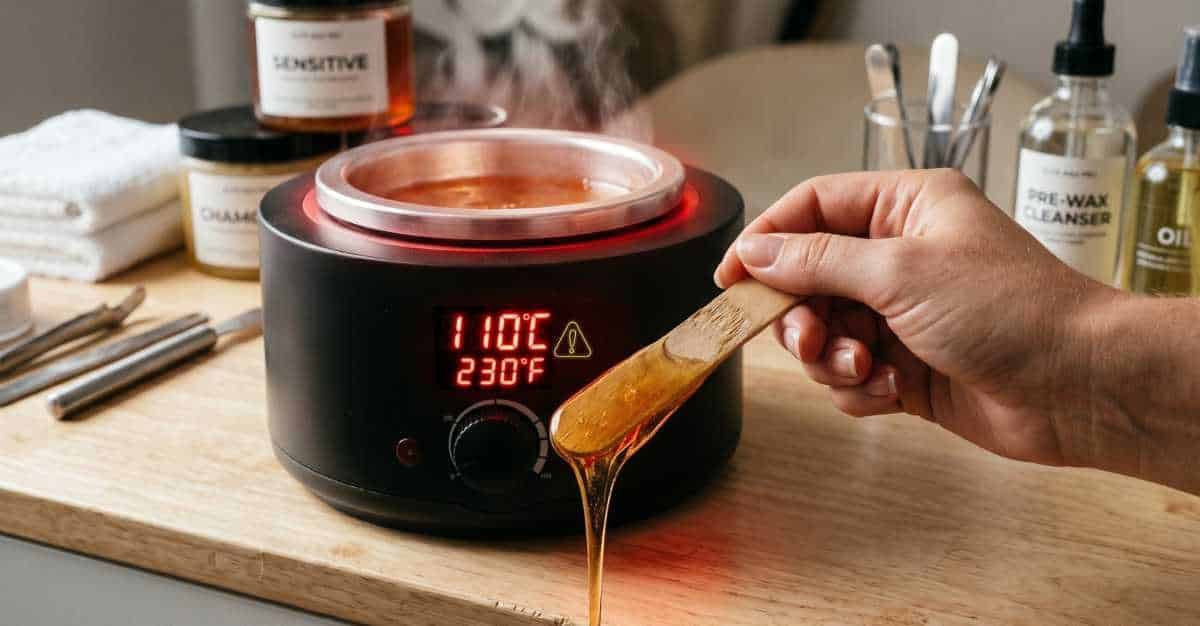
According to the NIH research, the temperature above 130°F (54°C) can burn your skin in under 30 seconds. However, Dermatologists set the safe upper limit at 125°F or 52°C for at-home use of wax.
| Zone | Temperature (°F) | Temperature (°C) | Notes |
| Safe Zone | 98°F – 125°F | 37°C – 52°C | Soft wax & sugar wax range. Comfortable on the skin. |
| Caution Zone | 126°F – 150°F | 52°C – 65°C | Hard wax range. Always test the wrist first. |
| Danger Zone | 150°F+ | 65°C+ | Burns skin in seconds. Never apply to the skin. |
Leg skin is more resilient than the thin facial or bikini area skin. But still, it is at high risk of burning quickly from overheated wax. Clinical research shows microwave-heated depilatory wax can reach very high temperatures.
It is often even above 100 °C (212 °F) when improperly heated. This just causes real thermal injury when it contacts skin. In documented cases of wax-burn injuries, even thicker skin areas like the thigh have been affected. Even worse, some burns may require medical treatment.
What are The Practical Ways to Test Wax Temperature
Professionals usually test the wax temperature in a few effective ways, like the wrist test and the spatula drip test. Often, you can go with a digital thermometer reading. Together, they confirm the wax is safe, consistent, and ready to apply.
Here is how you can do these:
1. The Spatula Drip Test
This is the fastest consistency check professionals use before every application. For this,
- Just lift your spatula straight up from the wax pot.
- Watch how the wax drips off.
- If it is a slow, honey-like drip, this is completely perfect. In case it is runny, meaning that it’s too hot and you need to adjust it right away.
2. The Inner Wrist Test
This is another quick home-based test you can do to confirm that your leg wax temperature is at a safe level:
- Dab a small amount on your inner wrist.
- Wait 3 seconds and assess.
- If you feel warm and comfortable, that means it is safe. But if it is stinging or burning, that means it’s too hot and completely unsafe to apply.
3. The Digital Thermometer Test
- This is the simplest test; you will get an exact, reliable number. To do so,
- Dip a candy or instant-read thermometer directly into the wax.
- Now read the temperature immediately.
- When done, cross-check against your wax type’s safe range.
Step-by-Step Guide to Safe Leg Waxing at the Right Temperature
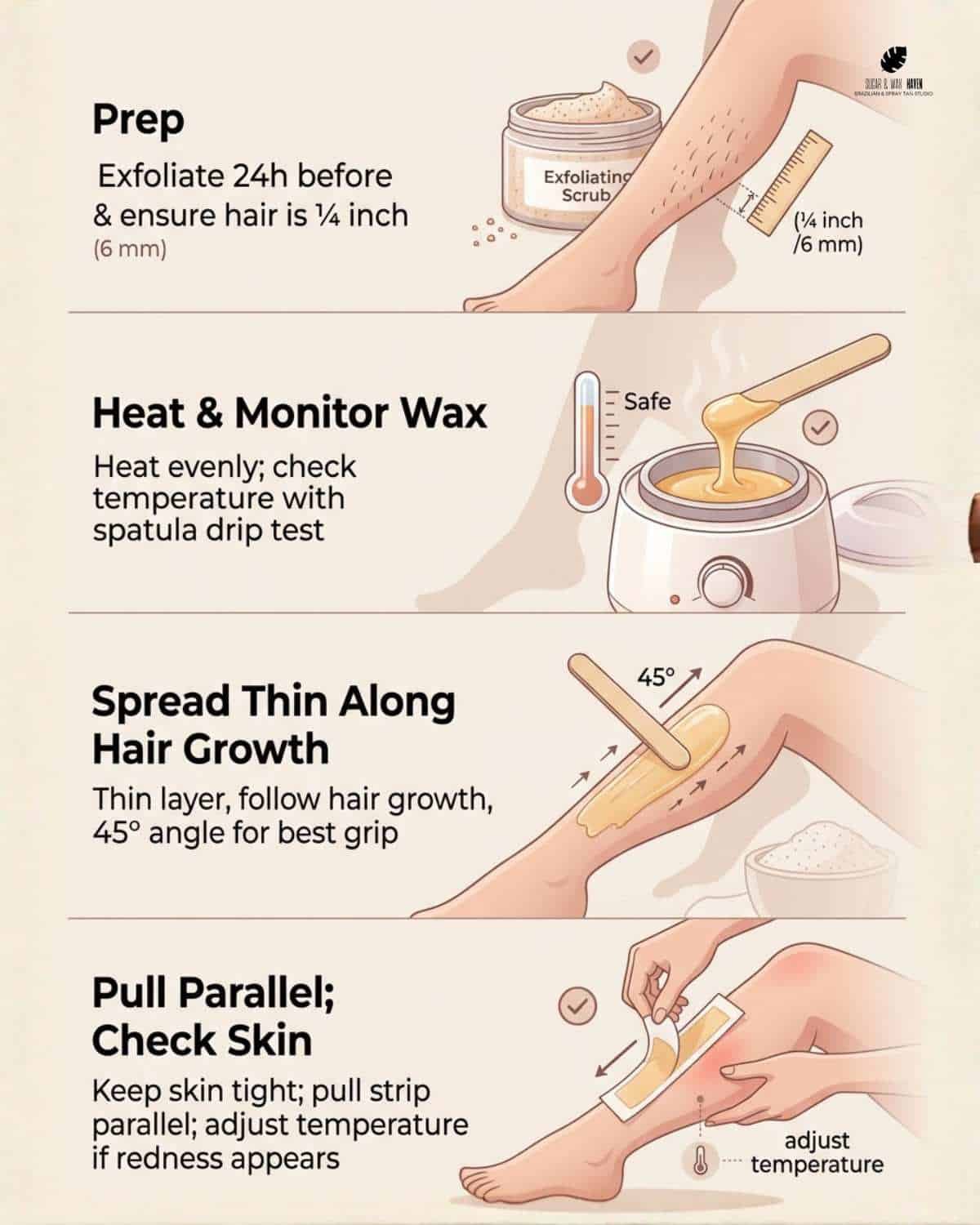
Step Sections (with icons/illustrations):
- Prep: Exfoliate & Hair ¼”
- Icon: exfoliating scrub and small ruler
- Caption: “Exfoliate 24h before & ensure hair is ¼ inch (6 mm)”
- Heat & Monitor Wax
- Icon: wax pot with thermometer and spatula
- Caption: “Heat evenly; check temperature with spatula drip test”
- Spread Thin Along Hair Growth
- Icon: spatula spreading wax at 45° angle on leg
- Caption: “Thin layer, follow hair growth, 45° angle for best grip”
- Pull Parallel; Check Skin
- Icon: hand pulling wax strip with check mark on leg
- Caption: “Keep skin tight; pull strip parallel; adjust temperature if redness appears”
You have to be cautious from the first to get the leg waxing right, even before opening the wax pot. Starting from the right temperature, the correct application angle, and a confident removal pull all decide the best leg waxing.
Here are the clear steps you must follow:
Step 1: Prep: exfoliate, hair ¼”
First, you have to exfoliate your legs 24 hours before waxing to clear dead skin cells. This way, wax will grip hair directly. Now check and ensure the hair is about ¼ inch (6 mm) long, which is almost the same length as a grain of rice.
According to Healthline, hair shorter than ¼ inch means wax cannot adhere to the surface properly. It often leads to incomplete removal and potential skin irritation.
Step 2: Heat and monitor per patch
Once your skin is prepped, start heating the wax slowly and stir regularly. Remember, uneven heating creates dangerous hot spots. The better option is to always run your thermometer check and spatula drip test before touching skin.
According to experts, it must be warm enough to spread easily but cool enough not to burn. In case the temperature drops mid-session, reheat and re-test before continuing.
Step 3: Spread thin along hair growth
This is the time to check and ensure the right consistency of the wax. In case it is too thick, it will trap heat against your skin and increase the risk of burns. Instead, hold your spatula at a 45-degree angle and spread a thin, even layer.
Do it always in the direction of hair growth. Experts confirm that a super-thin layer at 45 degrees ensures wax grips the hair root.
Step 4: Pull parallel; log each patch
You have to keep your skin tight, then pull the strip flat and parallel to the skin. After removing it, take a quick look at your skin. If you notice deeper-than-normal redness, your wax is likely too hot.
Just lower the temperature slightly before moving on. But in case the wax feels like it’s dragging or your skin feels tight, be sure it may have cooled down too much. You have to warm it up a bit before continuing. To avoid complications, it is recommended to consult licensed skincare professionals, such as those you will find at Sugar Wax Haven, and ensure safe leg waxing.
What are the 4 Key Factors Affecting the Wax Temperature
There are several factors that will affect your wax temperature. Beyond just wax type, your room temperature, skin sensitivity, and hair thickness all directly affect what wax temperature works safely and effectively for your leg waxing session.
Room temperature (cold room = wax thickens faster)
Room temperature directly changes how fast your wax temperature changes. According to the expert recommendation, a hot room makes the wax too runny.
On the other hand, a cold room causes it to harden too quickly on the skin. So in the winter, your wax loses its working temperature faster. It is recommended to adjust the Always wax in a stable, draft-free room for consistent results.
Humidity (affects sugar wax)
Along with the room temperature, humidity has a notable impact on how the wax temperature changes. For instance, in high humidity, often in the 60% range, the wax absorbs moisture, which turns the consistency too soft and sticky.
You will find the wax clumps instead of pulling hair properly. But in case it is a dry condition like below 40%, sugar wax loses its moisture quickly and turns brittle in seconds. It cracks before you can remove hair.
Body heat
Along with all of the above, wax temperature also changes based on body temperature across different areas. Naturally warmer areas like the bikini line and underarms keep wax softer for longer. On the contrary, cooler areas like the legs cause wax to lose heat more quickly after application.
Wax warmer quality
Your warmer quality directly decides how accurately your wax holds its target temperature. If it is the cheap quality warmer with no thermostat added, chances are you will get extreme temperature and it leads to dangerous hot spots. This type of warmer can’t maintain the exact condition and fluctuates the temperature.
That’s the reason professional waxing services like those you will find at Sugar Wax Haven utilize quality warmers with precise thermostat controls to ensure proper heat distribution. Quality warmers use multi-directional heat sources, which give the wax an even, honey-like consistency throughout and reduce skin irritation on contact.
What are the 4 Common Leg Waxing Temperature Issues
The most common leg waxing temperature issues are overheated wax, which can burn or irritate the skin. Wax that’s too cool won’t grip hair properly, causing breakage and patchy results. Also, uneven heating leads to inconsistent removal.
Here are the key temperature challenges you need to watch for:
Wax is too Runny
Users often don’t know how to wax the legs and make it too thin due to overheating, even just by a few degrees. If you notice smoke or the wax looks unusually thin, just take the pot off the heater and stir it continuously. It will bring the temperature down faster. Also, you can add a few fresh wax beads to cool it more quickly.
Wax Grips Skin Instead of Hair
When you find that the wax grips skin instead of the hair, be sure this is a temperature issue. When the wax is too cool, it doesn’t stick properly to the hair.
For this, you may need to go over the same area multiple times, which can lead to irritation and skin damage. In this case, slightly increase the temperature by 2°F–3°F at a time. Before applying, test it on your wrist.
Hair Breaking at the Surface Instead of Pulling from the Root
Sometimes, you have pulled the strip and notice short, snapped hairs instead of clean removal. This usually happens when the wax is too cool.
When it sets too quickly, it becomes less flexible and snaps during removal. You will find that the hair is breaking at the surface instead of pulling it from the root. Slightly increase the wax temperature by 2°F–3°F so it stays flexible. Also, it will grip the hair properly.
Wax Sets Before You Can Remove It
If you have applied the wax and find it getting hardened before you even get a chance to remove it, be sure it is a room temperature issue. When the room is too cold, or there’s air conditioning, it makes the wax cool down too quickly.
So it is always recommended to work in a slightly warmer room. Also, try to keep your wax warmer close by to maintain a steady temperature between applications.
Schedule Your Professional Leg Waxing Session
Temperature is one of the core things that controls everything in a leg waxing session. Now you have the exact numbers, the science, and the professional framework to get it right.
Take note that the right wax temperature for legs changes with seasons, room conditions, and skin sensitivity. So it is always recommended to test and adjust accordingly.
Are you interested in doing your leg waxing through a professional hand without getting any hassle of temperature adjustment on your own? Book your appointment at Sugar Wax Haven today.
Frequently Asked Questions
Can the same wax temperature work for both legs and the bikini area?
No, the bikini area runs naturally warmer and has thinner and more sensitive skin. So for this, you must drop the temperature by 3°F–5°F when moving from legs to more sensitive zones.
Does wax temperature affect how long results last?
Yes, wax temperature has a direct impact on how long the results will last. The correct temperature grips hair at the root cleanly. You will get 3–4 weeks of smooth skin. But the wrong temperature breaks hair at the surface and gives patchy results.
How does wax temperature affect post-wax redness?
It directly affects it. Wax even slightly above the safe range keeps skin inflamed longer after removal. With the correct temperature assured, you can minimize post-wax redness significantly.